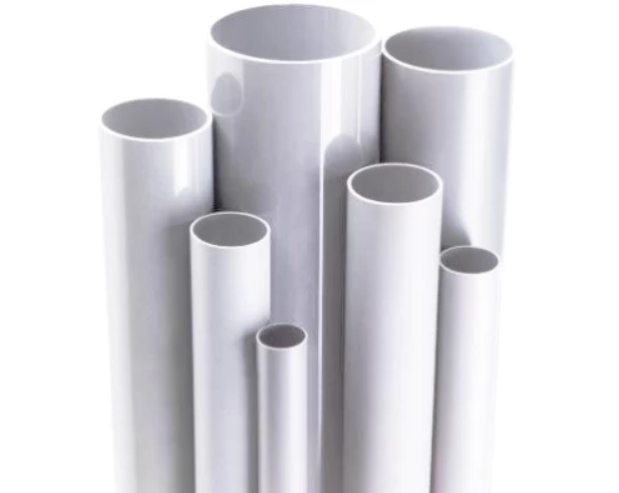
Two choices decide whether a water line works well for years or gives trouble from the first season: the pipe's size (diameter) and its pressure class. Pick a pipe that is too small and your pump works harder while less water reaches the tap or field. Pick a pressure class that is too low and joints can leak or the pipe can burst. This guide explains both in plain language.
1. Choosing the right pipe size
Pipe size decides how much water the line can carry comfortably. Water moving through a narrow pipe faces more friction, so the pump has to push harder and less water comes out at the end. A slightly bigger pipe often gives noticeably better flow and lower electricity bills.
- Match the pump outlet. As a basic rule, do not use a pipe smaller than your pump's delivery outlet.
- Long distance? Go one size up. Friction increases with length, so long lines to fields or overhead tanks benefit from a larger diameter.
- Main line bigger, branches smaller. In homes and buildings, use a larger main supply line and smaller branch lines to bathrooms and kitchens.
- Plan for the future. If you may add more taps, bathrooms or sprinklers later, a slightly larger main line saves re-laying pipe.
2. Understanding pressure class
The pressure class (or pressure rating) tells you how much water pressure a pipe is designed to handle continuously. Pressure pipes in India are commonly sold in classes such as 4, 6 and 10 kg/cm².
A simple way to think about it: 1 kg/cm² is roughly the pressure of a 10-metre column of water. So if your pump has to push water up and along a total height (head) of about 40 metres, the pipe sees roughly 4 kg/cm² of pressure. Always choose a class with a safety margin above your actual working pressure, because pumps starting and stopping cause short pressure surges.
- Household lines fed from an overhead tank: pressure is low, so lower classes are usually enough.
- Lines fed directly by a pump: check the pump's maximum head and choose a class comfortably above it.
- Borewell column pipes: the pipe near the pump carries the full pumping pressure, so deeper borewells and more powerful submersible pumps need a higher pressure class.
3. Pipe size and class for borewells
For borewells, three things matter: the depth of the water level, the size of the submersible pump, and the borewell casing diameter. The column pipe must fit inside the casing with room to lower and raise the pump, be strong enough to hold the weight of the pump and the water column, and be rated for the pump's pressure.
Rigid UPVC column pipes are widely used for most borewells, while HDPE pipes are chosen where a flexible, continuous line is preferred. For casing and general borewell use, see our PVC pipes.
4. Common mistakes to avoid
- Buying the cheapest, lowest class to save money on a pump-fed line. A burst pipe costs far more.
- Reducing pipe size halfway along a line, which creates a bottleneck.
- Mixing pipes and fittings of different standards, which leads to loose or leaking joints.
- Ignoring the pump's maximum head when choosing the pressure class.
Frequently asked questions
Does a bigger pipe increase water pressure?
Not exactly. A bigger pipe reduces friction, so more water reaches the outlet at better pressure, especially over long distances. It does not add pressure beyond what the pump or tank provides.
Can I use a higher pressure class than I need?
Yes. A higher class is stronger and safe to use. It simply costs a little more.
How do I find my pump's head?
It is printed on the pump's nameplate or in its manual, usually in metres. Divide by 10 for an approximate pressure in kg/cm².
Not sure which pipe you need?
Share your pump size, borewell depth or site details with Duro Pipe Industries and our team will suggest the right size and pressure class. Contact us for prices and bulk orders.